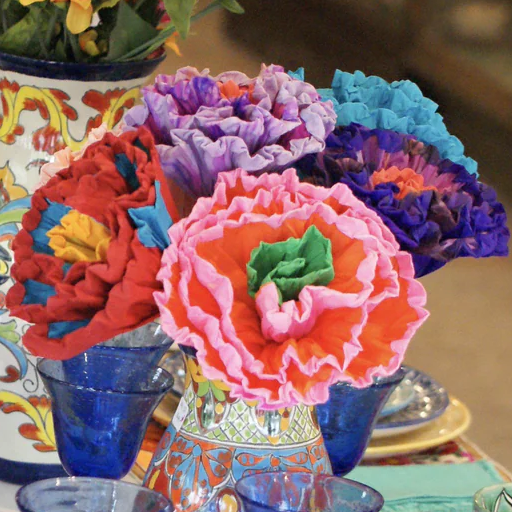
Few handmade crafts capture the joy and imagination of Mexico as vividly as paper flowers. Bright, bold, and bursting with life, they are more than just decoration as they are symbols of identity and creativity, carrying centuries of artistic heritage in every petal.
Made from delicate sheets of tissue or crepe paper, Mexican paper flowers transform simple materials into extraordinary color.
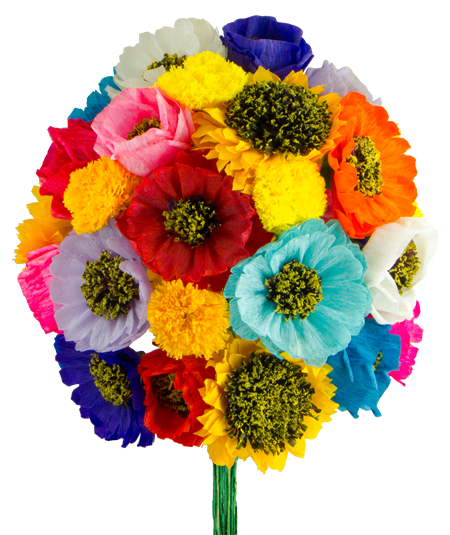
They are used to adorn altars, weddings, festivals, and religious processions, and often stand in for natural blooms when fresh ones are unavailable. For many artisans, these flowers are a way to express both devotion and beauty, connecting their craft to the heart of community life.
A Brief History of Paper Flowers in Mexico
Long before tissue paper arrived from overseas, the ancestors of modern paper flowers existed in the form of Amate, a type of handmade bark paper.
In pre-Hispanic times, the Aztecs and Mayas used amatl not only to write codices but also to decorate temples and funerary spaces, imbuing their creations with ritual meaning.

After the Spanish conquest, European paper became available throughout New Spain. The first paper mill in the Americas was founded in the 16th century in Culhuacán, near Mexico City. Later, through the trade route of the Manila Galleons, thin, brightly colored Chinese tissue paper (papel de China) arrived from Asia and was quickly embraced by local artisans.
It was the perfect material for creativity: flexible, light, and inexpensive.
By the 17th century, papel de China was being shaped into flowers, flags, and festival ornaments, especially during times when natural flowers were scarce. Churches and town squares bloomed with paper bouquets that filled the absence of nature with human artistry.
Over time, Mexican artisans refined the craft, developing hundreds of styles and color combinations. Each paper flower became a reflection of both regional aesthetics and the maker’s imagination. Today, they remain a vital expression of Mexican folk art, cherished in homes, sold in markets, and exported around the world.
Flowers with Cultural Significance
While artisans create every imaginable bloom in paper form, certain flowers hold special meaning in Mexican culture and tradition. These blossoms, both natural and symbolic appear again and again in art, rituals, and celebrations.
Dahlia (Dahlia spp.)
The dahlia, Mexico’s national flower, is a symbol of resilience and elegance. The Aztecs called it acocoxóchitl, meaning “hollow-stemmed flower,” and used it in ceremonies, medicine, and even as food.
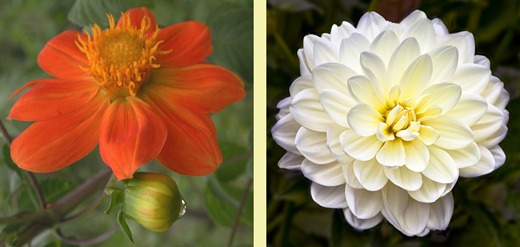
In 1789, dahlia seeds were sent from Mexico to the Royal Botanical Gardens of Madrid, where the flower was classified and named in honor of Swedish botanist Andreas Dahl. On May 13, 1963, President Adolfo López Mateos officially declared the dahlia the National Flower of Mexico.
Paper dahlias, with their intricate petals and radiant colors, are among the most beloved handmade decorations in Mexico, often found in home arrangements, fiestas, and parades.
Cempasúchil (Tagetes erecta)
Known as the flower of the dead, the cempasúchil holds deep spiritual meaning. Its name comes from the Nahuatl word zempoalxóchitl, meaning “twenty flowers.”
The Aztecs used its golden-orange blooms to adorn tombs and altars, believing its scent and color guided the souls of the departed back to the living world.
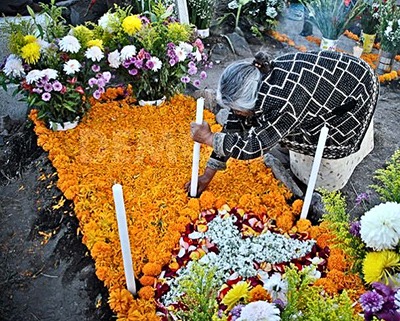
Today, during Día de Muertos, both natural and paper cempasúchiles line streets, cemeteries, and altars throughout Mexico. Their vivid color evokes sunlight and continuity, the eternal bridge between life and death.
Alcatraz (Zantedeschia aethiopica)
The calla lily, or alcatraz, became a Mexican icon through the paintings of Diego Rivera, who often depicted Indigenous women carrying large bundles of the elegant white flowers.
Whether Rivera was inspired by a presidential commission or by Frida Kahlo’s affection for the blooms remains uncertain, but his work forever tied the alcatraz to Mexican imagery.
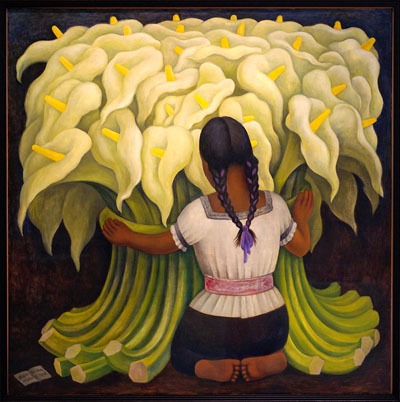
Paper alcatraces are now popular souvenirs for visitors, symbolizing purity and national pride. Their sculptural form, simple yet majestic makes them a favorite subject for skilled paper artists.
Pictured above: “The Flower Seller” by Diego Rivera, showing the calla lilies that inspired generations of artisans.
Rosa (Rosa spp.)
The rose is a universal emblem of love and devotion, but in Mexico, it carries a sacred story.
According to legend, when Our Lady of Guadalupe appeared to Juan Diego on Tepeyac Hill, she instructed him to gather roses blooming miraculously in winter. He wrapped them in his cloak, and when he presented them to the bishop, the flowers fell, revealing the Virgin’s image imprinted on the fabric.
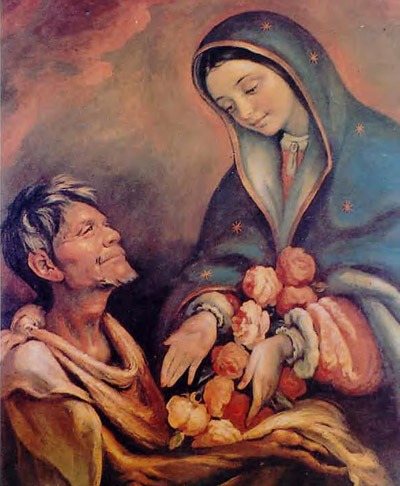
This miracle cemented the rose’s place in Mexican spirituality. Today, paper roses are crafted for religious festivals, weddings, and Valentine’s Day, symbolizing faith and affection.
Girasol (Helianthus annuus)
The sunflower, with its golden face and spiraling seeds, has a history rooted in ancient Mexico. Though once thought to have been introduced from North America, studies by paleoethnobotanist David Lentz revealed that sunflowers were cultivated in northern Mexico 4,000 years ago.
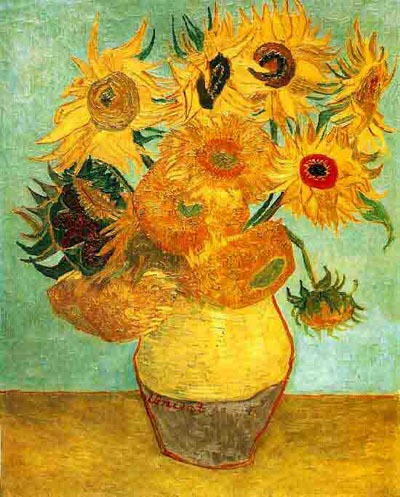
The Aztecs called it chimalácatl and associated it with the sun and war, using it in healing rituals and as an aphrodisiac.
In modern times, both real and paper sunflowers are cherished for their warmth and joy which are symbols of optimism and life itself.
Artists around the world, from Diego Rivera to Vincent van Gogh, have immortalized the sunflower as a muse.
Shown above: “Twelve Sunflowers,” Vincent van Gogh.
Nochebuena (Euphorbia pulcherrima)
Known internationally as the poinsettia, the nochebuena is native to central Mexico. The Aztecs called it cuetlaxóchitl, “flower with petals as strong as leather,” and saw it as a symbol of warrior blood and sacrifice.
When Spanish colonizers noticed the plant blooming around Christmas Eve, they renamed it Noche Buena, or “Good Night.”
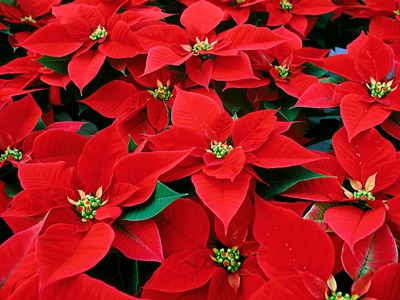
In the 1820s, U.S. ambassador Joel Roberts Poinsett brought cuttings of the plant from Mexico to South Carolina, where it became a holiday favorite. The plant later took his name abroad.
In Mexico, both paper and real nochebuenas are used during Christmas to make crowns, garlands, and altar decorations, filling homes with festive red and green.
The Art and Technique
Creating paper flowers may seem simple, but the process requires precision, patience, and a painter’s eye.
Artisans begin by cutting and shaping petals from sheets of colored paper, layering them carefully to mimic the natural curvature of real flowers. Each bloom is then assembled by hand, using wire, glue, and crepe folds to give depth and movement.
In some regions, the craft has evolved into a community art form, with entire families producing flowers for local markets or for export. Towns in Puebla, Guerrero, and Mexico City are known for their vibrant stalls of paper bouquets, sold during Día de Muertos, Independence Day, and Christmas.
What makes Mexican paper flowers distinct is not only their color palette: bright pinks, tangerine oranges, golden yellows, and emerald greens, but the symbolism woven into every design. They are as much about expression as imitation.
A Tradition That Blooms Forever
More than just a substitute for nature, Mexican paper flowers embody the creative heart of a nation. They reflect a worldview that sees art and life as inseparable, where even humble materials can be transformed into beauty and meaning.
Each flower, whether a cempasúchil for the dead, a dahlia for national pride, or a rose for the Virgin, carries a story of faith, heritage, and imagination.In a world of fleeting trends, these handmade blooms endure as symbols of Mexican resilience, artistry, and joy and those are flowers that will never fade.
Leave a Reply